
Artichoke, Basil and Lemon Pesto
Author:
Annabelle Cooper
Category
Gluten Free,Low Carb,Sauces & Condiments,Snack,Vegetarian
Difficulty
Beginner
Rated 5.0 stars by 1 users
8
10 mins
Ingredients
- 1 can artichoke hearts, drained
- Juice of 1 lemon
- 1 tbsp lemon zest
- ½ cup grated parmesan cheese
- ½ cup pine nuts
- 2 cloves garlic, chopped
- 1 cup fresh parsley
- 1 cup fresh basil
- ½ cup extra virgin olive oil
- Salt and pepper, to taste
Directions
What are we cooking today?
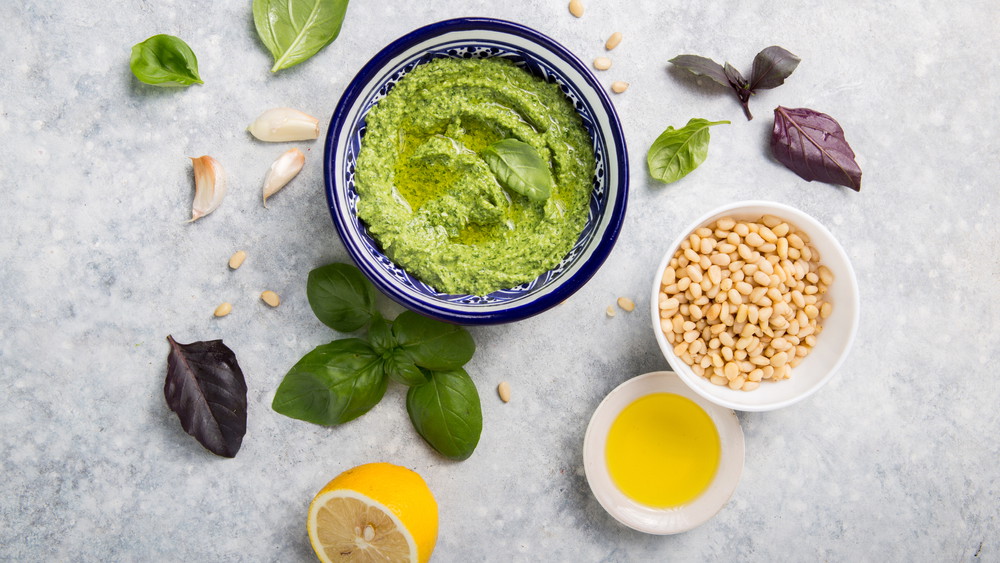
Pesto can be added to pasta, a dip, with a salad or even in a stir fry. Make in advance and make your choice when you need it!
Getting started
- Wash the herbs, peel and mash the garlic, juice and zest the lemon.
Place the garlic, herbs, lemon zest, pine nuts, grated parmesan cheese (or avoid for dairy-free option) and olive oil in a blender and pulse until smooth.
Add the artichoke hearts, season with salt and pepper and pulse again until desired consistency is reached (best when small pieces of artichokes are left).
When done, serve immediately.
Annabelle's tip
If you wish to prepare the pesto in advance, it can be kept in the fridge for a week or two if stored properly. Simply spoon the mixture in a glass jar, top with a bit of olive oil and seal properly with a lid.
If you want to preserve home-made pesto for longer, freeze it in manageable portion sizes by putting it in an ice-cube tray and keep in the freezer for up to 6 months. Whenever you need to use it, just keep the required amount at room temperature until it melts.
Nutrition
Nutrition
- Serving Size
- 8
- per serving
- Calories
- 191
- Total Fat
- 15 grams
- 20%
- Saturated Fat
- 3.2 grams
- 16%
- Cholesterol
- 3 milligrams
- 1%
- Sodium
- 87 milligrams
- 4%
- Total Carbohydrate
- 5.4 grams
- 2%
- Dietary Fiber
- 2.2 grams
- 8%
- Total Sugars
- 0.8 grams
- Protein
- 4 grams
- Calcium
- 7 milligrams
- 1%
- Iron
- 5 milligrams
- 28%
- Potassium
- 140 milligrams
- 3%
- Vitamin D
- 0 micrograms
- 0%
* The % Daily Value (DV) tells you how much a nutrient in a serving of food contributes to a daily diet. 2,000 calories a day is used for general nutrition advice.


